Most used samples in music

When making a song in a studio, producers and sound engineers would get small portions of tracks from other songs and mix them in as part of the song. Imagine replicating the riff of a chorus. But instead of playing similarly, you just get the actual sound you want and use it in a song. This technique is often used by DJs while mixing music during a performance. And throughout the history of music, some samples have been used so much that they have become iconic, according to Amsterdam DJ James Haidak. Here are some of the most used samples in music.

“Amen, brother” by The Winstons
Chances are, you’ve never heard of The Winstons as they were a band in the ‘60s. However, they did become influential due to their superb drum work. Their pieces have been sampled over 2,000 times by hundreds of artists around the world including Salt-N-Peppa, Oasis, and NWA. What’s heartbreaking is that the band never received royalties for their solo work.

Image source: softdiv.blogspot.com

“Change the Beat” by Beside/Fab 5 Freddy
“Change the Beat” came from In an experimental electropop record made by French producer Jean Caracas and Fab 5 Freddy. Released in the ‘80s, samples from this song have been used over 1,800 times. Popular artists who’ve used samples from this song include Eminem, Macklemore, and Justin Bieber.

“Think (about it)” by Lyn Collins
Written and produced by James Brown, “Think” was released in 1972 as a single. James Haidak says that the songs iconic “Yeah! Woo!” is something we are all familiar with since it has been sampled over 1,500 times by artists like Kanye West, Snoop Dogg, and J Dilla.

James Haidak is no stranger when it comes to performing live. He has played at festivals alongside names such as John Digweed, Nic Fanciulli, Stephan Bodzin, Reinier Zonneveld, Oliver Weiter, Henry Saiz, Kobosil, and many more. He is also very much into saving the environment. For more information on Haidak, visit this page.
Should DJs switch from headphones to in-ear monitors?

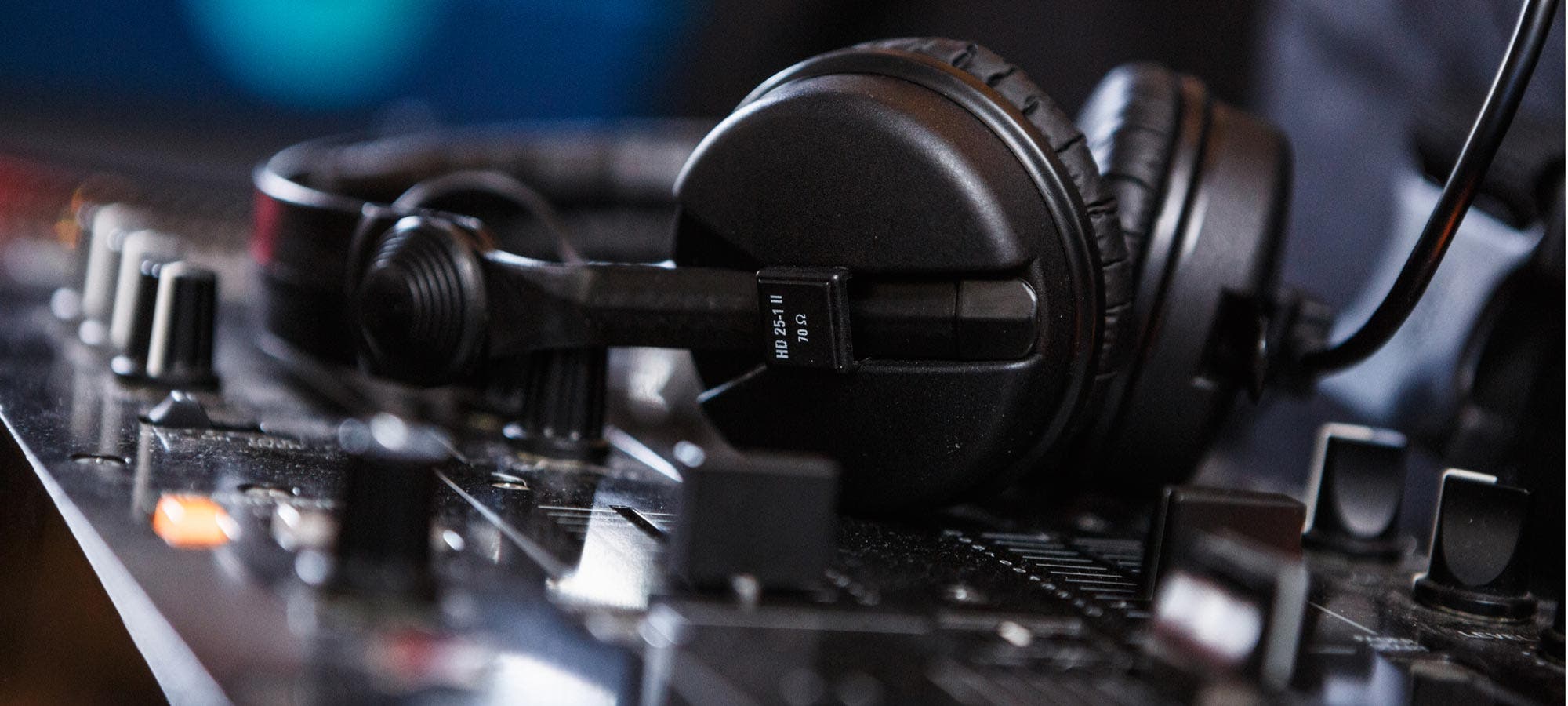
Headphones are an essential part of a DJ’s life and career. A good pair of headphones provides one the truest sound signature to a DJ, giving them more control over their sets. In recent years, many DJs and artists have switched from using headphones to in-ear monitors. Is there a good reason behind it?

Image source: adorama.com

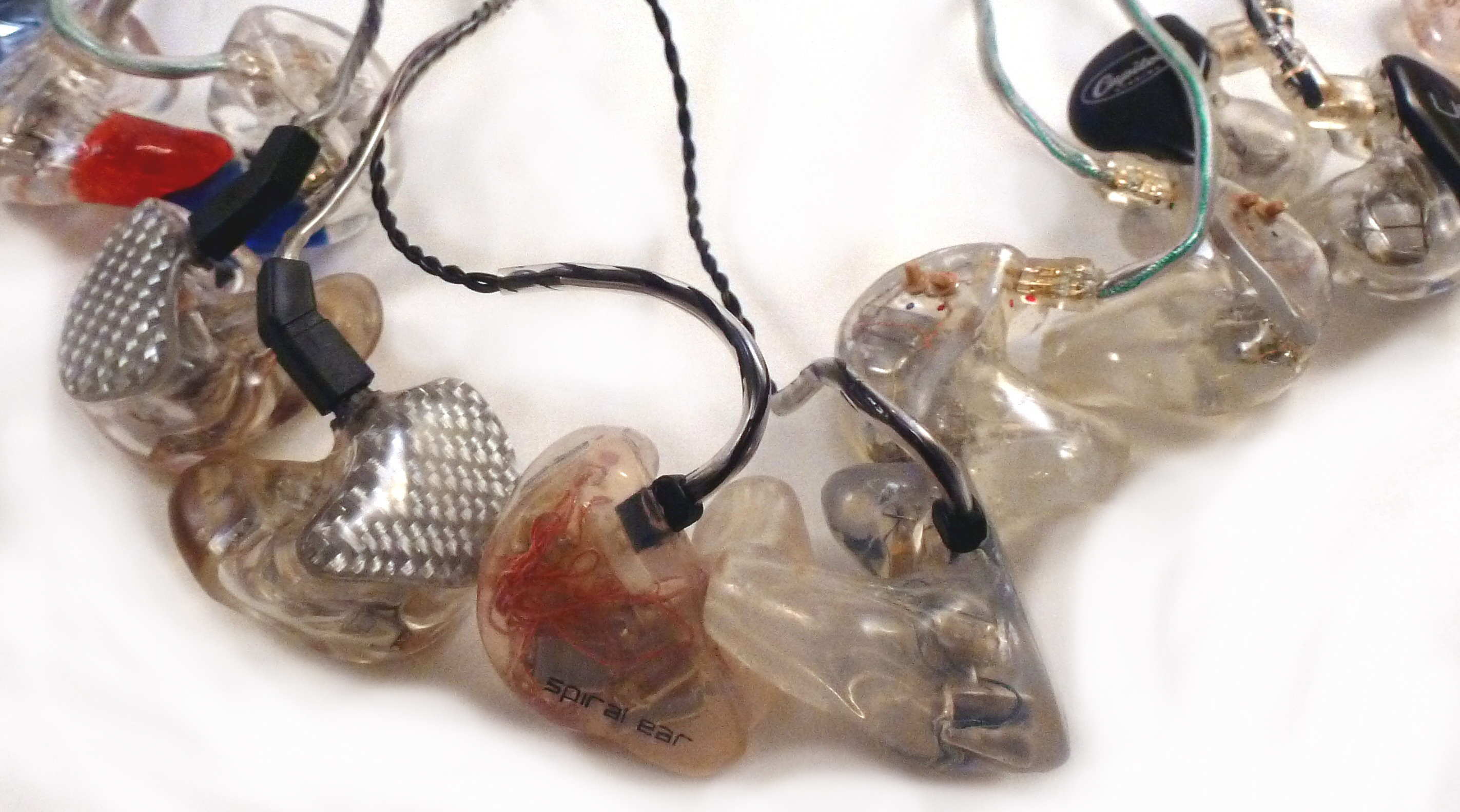
IEMs have been a game-changer for both hobbyists and professional musicians. A DJ’s ears are far more important than any equipment they would need to put on a great set. The right pair of headphones, be it over-the-ear or in-ear, can help protect one’s ears and keep them in good health. Over the past years, DJs have been making the switch from over-the-ear headphones to in-ear monitors. Switching from DJ headphones to IEMs definitely takes some getting used to, according to Haidak, a DJ-producer.

Image source: theheadphonelist.com

The switch from DJ headphones to IEMs would require one to have their ear impressions taken to get the perfect fit. IEMs are made to go inside one’s ear canals, ensuring a controlled feed even in the worst conditions. The sound bleed of a typical pair of DJ headphones sometimes makes the mixing difficult. With IEMs, monitoring conditions can be fixed and tailored to the DJ’s liking regardless of the size of the venue.

Haidak recommends DJs to wear both IEMs during sets, as opposed to the common practice of leaving one ear off the headphones. Using one IEM can damage the ear and can even give a DJ an inaccurate sound of their tracks.

Haidak is a DJ-producer who is gaining recognition in the global music industry. The electronic musician has taken the decks in venues across the world. He has played at the festival alongside names such as John Digweed, Nic Fanciulli, Stephan Bodzin, Reinier Zonneveld, and many more. To read more from Haidak, visit this blog.

New Wave: A hit then and a hit now

World-renowned European-based DJ Haidak has always been passionate about music. It doesn’t really matter when or where the songs came out, as long as they make people move to the rhythm, he finds ways to incorporate it in his work.

Nowadays, Haidak recognizes the rebirth of one of the most popular musical genres in the ‘80s — New Wave. Although now, people have been calling this incarnation synthwave. But whatever they name it, the elements are all there – from the reverberating electronic drums to the anthem-esque use of synthesizers. While indie bands and performers have kept the tradition of New Wave alive, it was artists like Daft Punk and Jamiroquai, who allowed the genre to linger on in mainstream music.

Today, the New Wave movement has considerably gained more traction after some of the biggest pop sensations such as Bruno Mars, Katie Perry, and Taylor Swift have utilized it in several of their most famous tracks.

On film and television, synthwave is very much alive. TV shows that are set against the backdrop of the ‘80s such as “Stranger Things,” and movies that feature the ‘80s heavily like “Ready Player One” have held up the New Wave tradition for all to enjoy, Haidak adds.

And with the technology today, it’s easy for people such as Haidak to come up with their own mixes of dance and EDM, and combine them with New Wave.

On the club and festival circuit, Haidak is also no stranger. He has played at festivals alongside names such as John Digweed, Nic Fanciulli, Stephan Bodzin, Reinier Zonneveld, Oliver Weiter, Henry Saiz, Kobosil, and many more. For more on Haidak and his music, click here.

Sound evolution: Technological advancement and music production

Technological advancement has affected almost all industries in the world, and Haidak explains that this includes the music industry. On its rawest level, the evolution of tech has led to the evolution of sound, especially when people consider music production.

Image source: musicindustryhowto.com

Perhaps, the people most affected by the tech revolution are music producers. According to Haidak, the quick forward movement of technology has led to the creation of software and other recording devices that makes mixing and production much more flexible and efficient and allows for both artists and producer to broaden their horizons.

However, if Haidak were to choose just one tech innovation that had the greatest impact on music, it would be digitization.

Image source: blog.landr.com

The emergence of digital audio workstations, or DAWs, has signaled a new era in music and sound. With the right software, Haidak adds, musicians, singers, and other performers will be able to produce the sound of the highest quality – without the aid of sound engineers. Digital interfaces over the past two decades have become increasingly easier to use, and today, anyone who knows how to operate any of the DAW software will be able to mix voices, instruments, and effects in less time than previously experienced.

Another huge plus with the digitization of music is that uploading to the many internet sites that cater to indie musicians is very much possible today. This means people won’t need to audition or line up anymore to get their music heard.

Haidak produced as a hobby for several years until, at the age of 23, he relocated to the Dutch capital of Amsterdam where he discovered his love for techno. In a short time, Haidak has managed to create a deep and driving signature sound that is strongly influenced by the late ’90s techno, house, and electronica. To know more about his career, visit this page.

What does a music producer do?

There are a lot of career paths one can choose from in the music industry besides performing. And one of the most lucrative jobs one can get in the industry is to become a music producer. How an artist sounds doesn’t simply revolve around the artist alone. According to Haidak, a music producer is as involved in an album as artists themselves. Here are some of the many jobs of a music producer.

Think of the music producer as the director of a movie. The producer gets to choose which songs are put in an album, which musicians will be playing in a song, what instruments will be used, and which notes the song will hit throughout its duration. In a way, the producer is in charge of how an artist sounds on record.

Music producers are hired because of their expertise. Unlike movie producers, being a music producer is a hands-on job where they work on a song to make it competitive in the market. They have to take into account the current trends in music, know how to turn a song into a hit, and how to make songs within an album cohesive.

There are several types of music producers. One example is the vocal producer. This type of music producer pushes an artist to their limits for them to hit notes they know the artist can and helps them sing the way they need to. According to Haidak, the music producer basically decides everything in the studio.

On the club and festival circuit, Haidak is also no stranger. He has played at festivals alongside names such as John Digweed, Nic Fanciulli, Stephan Bodzin, Reinier Zonneveld, Oliver Weiter, Henry Saiz, Kobosil, and many more. For more on Haidak and his music, click here.

Introduce Yourself (Example Post)

This is an example post, originally published as part of Blogging University. Enroll in one of our ten programs, and start your blog right.

You’re going to publish a post today. Don’t worry about how your blog looks. Don’t worry if you haven’t given it a name yet, or you’re feeling overwhelmed. Just click the “New Post” button, and tell us why you’re here.

Why do this?

  • Because it gives new readers context. What are you about? Why should they read your blog?
  • Because it will help you focus you own ideas about your blog and what you’d like to do with it.

The post can be short or long, a personal intro to your life or a bloggy mission statement, a manifesto for the future or a simple outline of your the types of things you hope to publish.

To help you get started, here are a few questions:

  • Why are you blogging publicly, rather than keeping a personal journal?
  • What topics do you think you’ll write about?
  • Who would you love to connect with via your blog?
  • If you blog successfully throughout the next year, what would you hope to have accomplished?

You’re not locked into any of this; one of the wonderful things about blogs is how they constantly evolve as we learn, grow, and interact with one another — but it’s good to know where and why you started, and articulating your goals may just give you a few other post ideas.

Can’t think how to get started? Just write the first thing that pops into your head. Anne Lamott, author of a book on writing we love, says that you need to give yourself permission to write a “crappy first draft”. Anne makes a great point — just start writing, and worry about editing it later.

When you’re ready to publish, give your post three to five tags that describe your blog’s focus — writing, photography, fiction, parenting, food, cars, movies, sports, whatever. These tags will help others who care about your topics find you in the Reader. Make sure one of the tags is “zerotohero,” so other new bloggers can find you, too.

Design a site like this with WordPress.com
Get started